
India's annual industrial output grew at a slower-than-expected pace of 3.6 percent in September.

Industrial production re-entered the negative territory by contracting 1.6 per cent in January, mainly on account of the decline in output of capital goods, manufacturing and mining sectors. The output of the manufacturing sector -- which constitutes 77.6 per cent of the Index of Industrial Production (IIP) -- shrank by 2 per cent in January, as against a growth of 1.8 per cent during the same month last fiscal, as per data released by the government on Friday. The worst performance was witnessed by the capital goods sector, which recorded a contraction of 9.6 per cent during the month under review, compared to a 4.4 per cent decline a year ago.

'Understand how wedding expenses fit into your overall financial situation.' 'Evaluate how different levels of spending will impact other goals like retirement, travel, or housing.'

Alternative Investment Funds (AIFs) with a lock-in period performed better than the ones that allow investors to withdraw capital at any time. Close-ended schemes had a median return of 5.62 per cent in December, according to data from industry tracker PMSBazaar. The median returns for open-ended schemes were 3.91 per cent

The statistics ministry has proposed the new base year for GDP and IIP as 2017-18 while for CPI it will be 2018.

The March 2020 lockdown did not stop the spread of infection (as it triggered a huge reverse migration from cities), but it did help to flatten the curve and gave time to scale up health infrastructure.

Mutual funds (MFs) are lining up distinguished new fund offerings (NFOs) for the next financial year to win over investors after a lukewarm response to product launches in the 2022-23 financial year (FY23). NFOs drew a lukewarm response in FY23 as launches were mostly in the passive debt space, which has a comparatively lower popularity among retail investors. The limited launches in equity space also failed to rake in huge sums due to subdued investor sentiments in a volatile market.

Sluggish infrastructure sector growth would also have impact on IIP as these segments account for about 41 per cent of the total factory output.

Stocks of Hindustan Petroleum Corporation Limited (HPCL), Bharat Petroleum Corporation Limited (BPCL) and Indian Oil Corporation Limited (IOCL) have more headroom left despite the sharp run in the last few weeks, suggests a recent report from Morgan Stanley. Stocks of these oil refining and marketing companies (OMCs), it believes, are seeing multiples re-rate as investors reassess long-term growth prospects. "IOCL trades at one year forward P/BV of 1.2x, 19 per cent below +1 standard deviation (SD); BPCL trades at one year forward P/BV of 1.5x, near historical averages; HPCL trades at one year forward P/BV of 1.5x, near +1SD," Morgan Stanley said.

At a time when exchange-traded funds (ETFs) were unloading Jio Financial Services from their portfolios, some active fund managers were placing large bets on the demerged financial services arm of Reliance Industries Ltd (RIL), a report by Nuvama Alternative & Quantitative Research shows. Motilal Oswal Mutual Fund and Quant Mutual Fund were the top MF buyers of the stock in August. They bought around 60 million shares each, together investing around Rs 2,800 crore.

Manufacturing sector activities in India moderated in June from a 31-month high in May, but output remained in the growth territory, as new work orders expanded sharply amid favourable demand conditions, a monthly survey said on Monday. The seasonally adjusted S&P Global India Manufacturing Purchasing Managers' Index (PMI) fell from 58.7 in May to 57.8 in June. Despite the fall, the headline figure pointed to a considerable improvement in operating conditions, the survey said, adding that the demand strength positively impacted several other measures such as sales, production, stock building and employment.

Faulty Jan data blamed on festival holiday; govt to form review panel

During the month, inflation in vegetables shot up to 35.99 per cent, as against 26.10 per cent in October. Likewise, the prices of cereals and eggs grew at a faster pace of 3.71 per cent.

The wholesale price-based inflation declined to over two-year low of 3.85 per cent in January on easing prices of manufactured items, fuel and power, even though food articles remained expensive. This is the ninth straight month of decline in the rate of wholesale price-index (WPI) based inflation. The WPI inflation was 4.73 per cent in January and 13.43 per cent in February, last year.

The wholesale price-based inflation declined to a 21-month low of 5.85 per cent in November on easing prices of food, fuel and manufactured items. After remaining in double digits for 19 months, the wholesale price index (WPI) based inflation declined to 8.39 per cent in October. The inflation was 14.87 per cent in November 2021. "Decline in the rate of inflation in November 2022, is primarily contributed by fall in prices of food articles, basic metals, textiles, chemicals & chemical products and paper & paper products as compared to the corresponding month of the previous year," the commerce and industry ministry said on Wednesday.
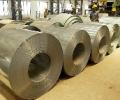
Led by crude oil and finished steel, the output of the six core infrastructure industries grew by 7.4 per cent in March, 2011, an improvement from the 6.8 per cent expansion clocked a year ago.

n the broader market, BSE Midcap and Smallcap indices are trading higher by 0.3% each.

Mobile phone manufacture in India started only in 2006.

Fruits, vegetables and eggs continued to witness deflationary trend during January this year, with their prices declining 4.18 per cent, 13.32 per cent and 2.44 per cent, respectively.

In order to boost growth amid some softening of inflation, RBI earlier this month cut the key interest rate by 0.25 per cent. It is scheduled to announce its mid-quarter policy review on June 17.

If government statistics are at variance with private data flow, chances are high that the latter presents a picture closer to reality.


Manufacturing activities in India advanced further and touched a 31-month high in May supported by stronger increase in new orders and favourable market conditions, which in turn generated more employment opportunities, a monthly survey said on Thursday. The seasonally adjusted S&P Global India Manufacturing Purchasing Managers' Index (PMI) rose from 57.2 in April to 58.7 in May, indicating the strongest improvement in the health of the sector since October 2020. The May PMI data pointed to an improvement in overall operating conditions for the 23rd straight month.

Growth in the eight core sectors jumped to 8.5% in April, due to a sharp pick-up in refinery products and a commensurate rise in electricity generation.
For the economy to grow by 6.9 per cent in 2011-12, GDP growth for the fourth quarter needs to be 6.9 per cent.

The 30-share index ended higher by 481.16 points or 1.91 per cent at 25,626.75 -- its highest closing since January 1.

The eight sectors, which also include fertilisers, steel, natural gas, electricity and crude oil, had expanded by 1 per cent in June last year.

The number of infrastructure projects cleared by a monitoring group set up in the Cabinet Secretariat had increased consistently in the past year.
WPI-based inflation falls to 5-month low of 6.16%.

Capital goods, a barometer of investments, showed a sharp increase in output by 14.6 per cent in January, 2018 as against a decline of 0.6 per cent year ago.

Wholesale price-based inflation rate fell to a 3-year low of (-) 3.48 per cent in May on easing prices of food, fuel and manufactured items, strengthening the case for continuing with the pause in rate hike in the coming months of the current fiscal. This is the second straight month when WPI has been in the negative zone mainly on account of a higher base and falling prices of fuel and manufactured goods. Food prices also eased during May. In May, 2022 WPI inflation was at 16.63 per cent. Last month, it was (-) 0.92 per cent.

India's manufacturing sector continued with its robust performance in November, mainly on the back of substantial easing in price pressures and strengthening demand from clients, a monthly survey said on Friday. The strong performance of the manufacturing sector is expected to continue in 2024 as well. The seasonally adjusted S&P Global India Manufacturing Purchasing Managers' Index (PMI) rose to 56 last month from the eight-month low level of 55.5 recorded in October.
During April-February, industrial output grew at 2.6 per cent compared with a growth of 2.8 per cent in the year-ago period.

In October 2010, the index of industrial production had expanded by 11.29 per cent.

The wholesale price-based inflation eased for the eighth consecutive month to 4.73 per cent in January on easing prices of manufactured items, fuel and power. The wholesale price-index (WPI) based inflation rate was 4.95 per cent in December 2022 and 13.68 per cent in January 2022. Inflation in food articles, however, rose to 2.38 per cent in January, from (-) 1.25 per cent in December, 2022.

Growth of capital goods at 9.6 per cent is inspiring as the investment cycle is expected to rebound in the coming months.

Natural gas output rose by 6.4 per cent in June.
India's manufacturing sector activity rose to a 13-month high in December, supported by healthy inflows of new business and strong demand conditions, according to a monthly survey. The seasonally adjusted S&P Global India Manufacturing Purchasing Managers' Index (PMI) stood at 57.8 in December, up from 55.7 in November, as business conditions improved to the greatest extent in over two years. The December PMI data pointed to an improvement in overall operating conditions for the 18th straight month.

The index had registered a growth of 2.8 per cent in January 2015.
The wholesale price-based inflation eased to a 29-month low of 1.34 per cent in March on easing prices of manufactured products and fuel items, even though food articles turned expensive.
 © 2026 Rediff.com - Advertise with us - Disclaimer - Privacy Policy - Sitemap - Feedback - About us - Terms of use - Grievances